Rhizomes respire. The rhizome is full of active tissue burning oxygen — its buds, its roots, and its stored starch all depend on that respiration. It has a genuine oxygen demand underground.
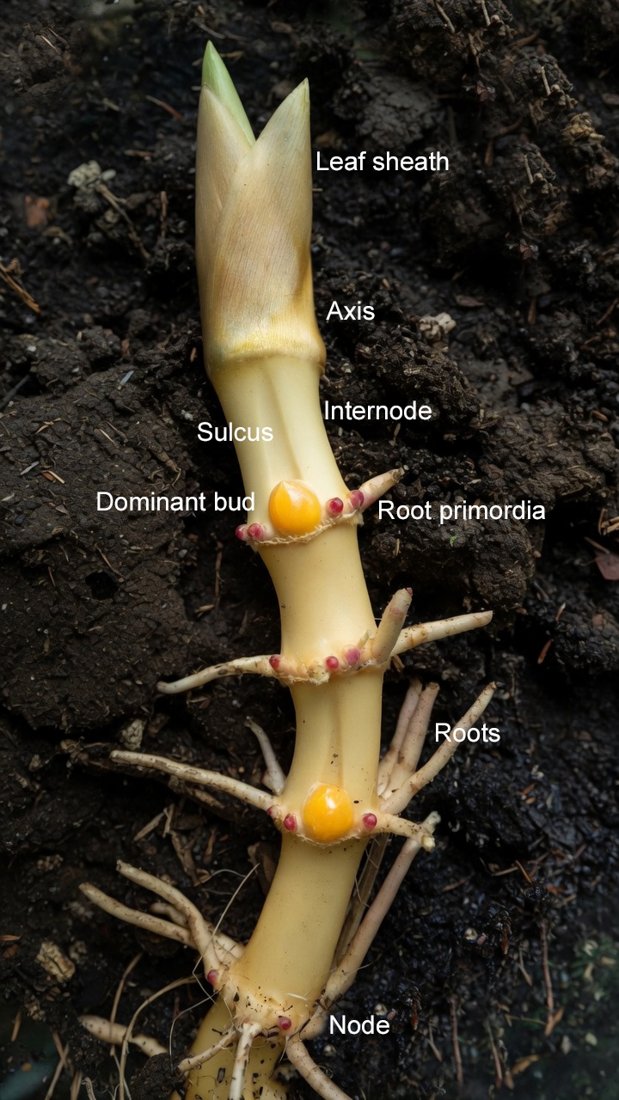
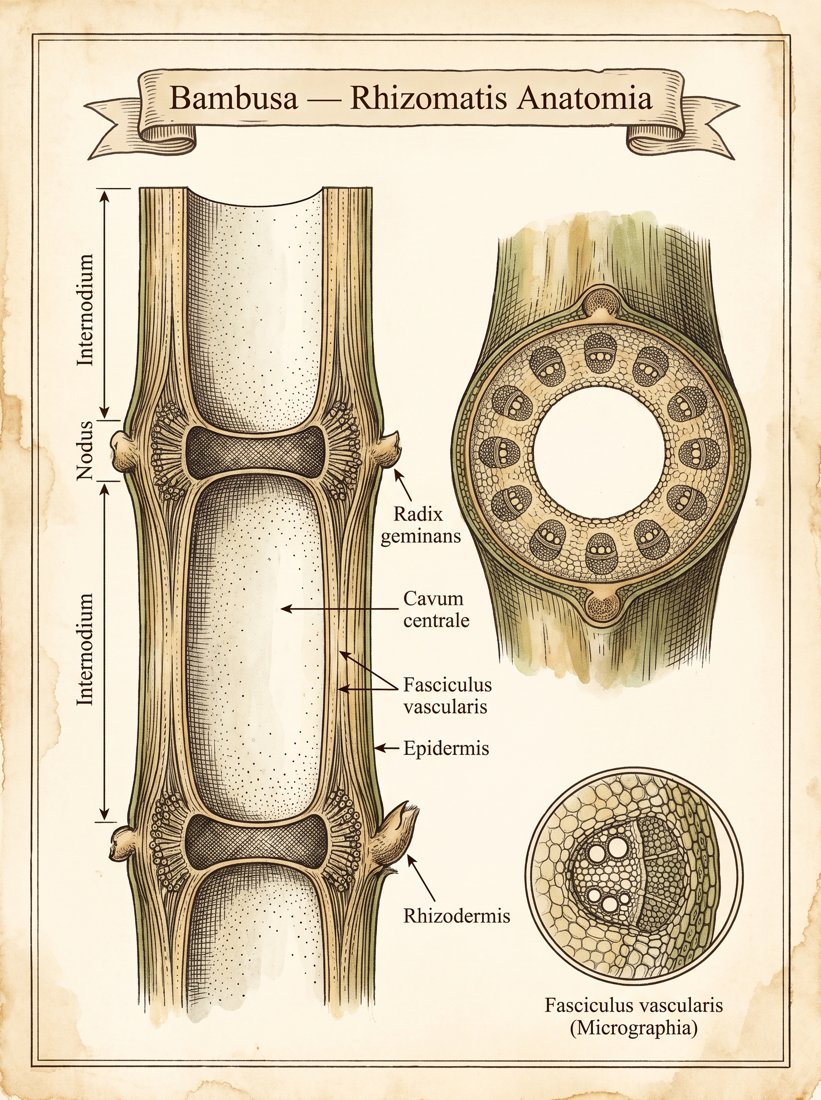
Bamboo, like reeds and other wetland-adapted grasses, has an internal ventilation system — a network of interconnected air channels called aerenchyma that thread through the plant. It is a low-resistance internal pathway for gas transport between the shoot and the root extremities.
Oxygen is supplied down to the roots and the rhizosphere, while carbon dioxide, ethylene, and methane travel from the soil back up to the shoots and into the atmosphere. Oxygen taken in above ground travels down the culm, through the nodes, into the rhizome, and out to the root tips; the waste gases make the return trip.
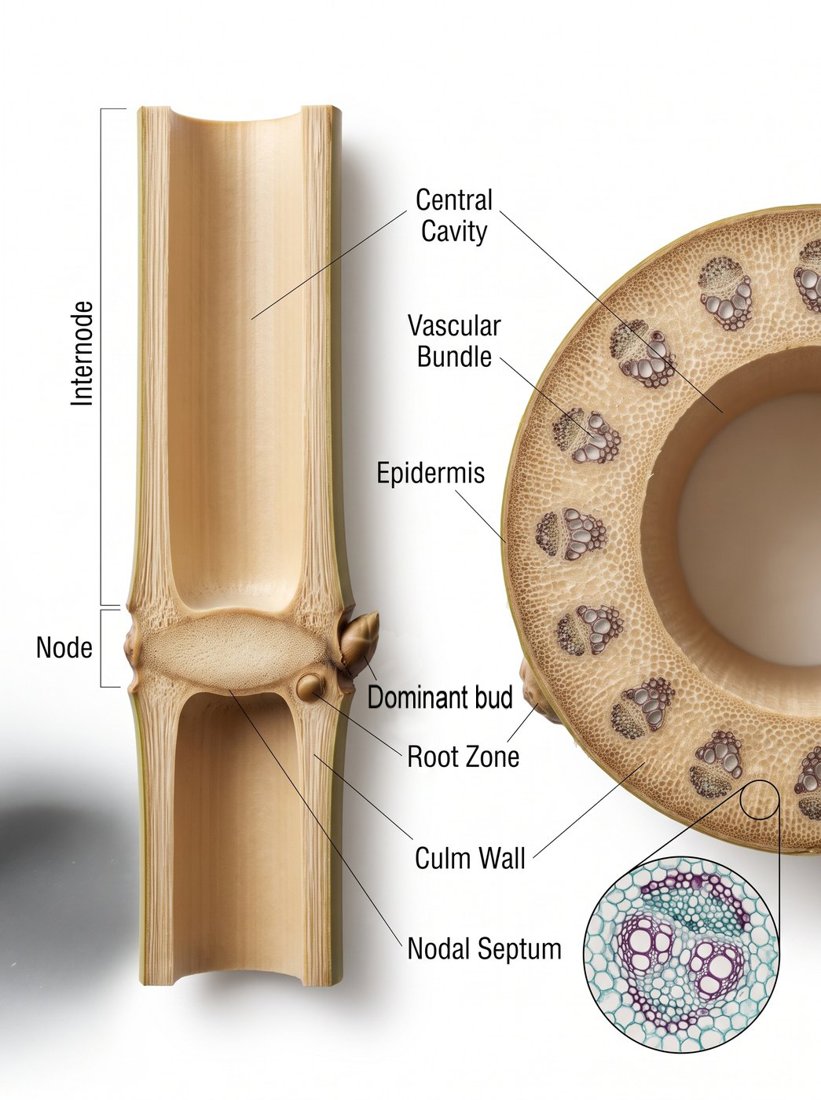
When the soil around the rhizome is low on oxygen — hypoxic — the rhizome does not suffocate quietly. It floats up. In research on mulched groves, once the soil oxygen was depleted, more than half the rhizomes migrated upward into the shallow top four inches of soil. The mechanism is exactly what we tell a client: during this up-floating, rhizomes that were meant to forage for nutrients, water, and oxygen instead move upward, toward the surface, simply to get air. The plant chases air toward the light.
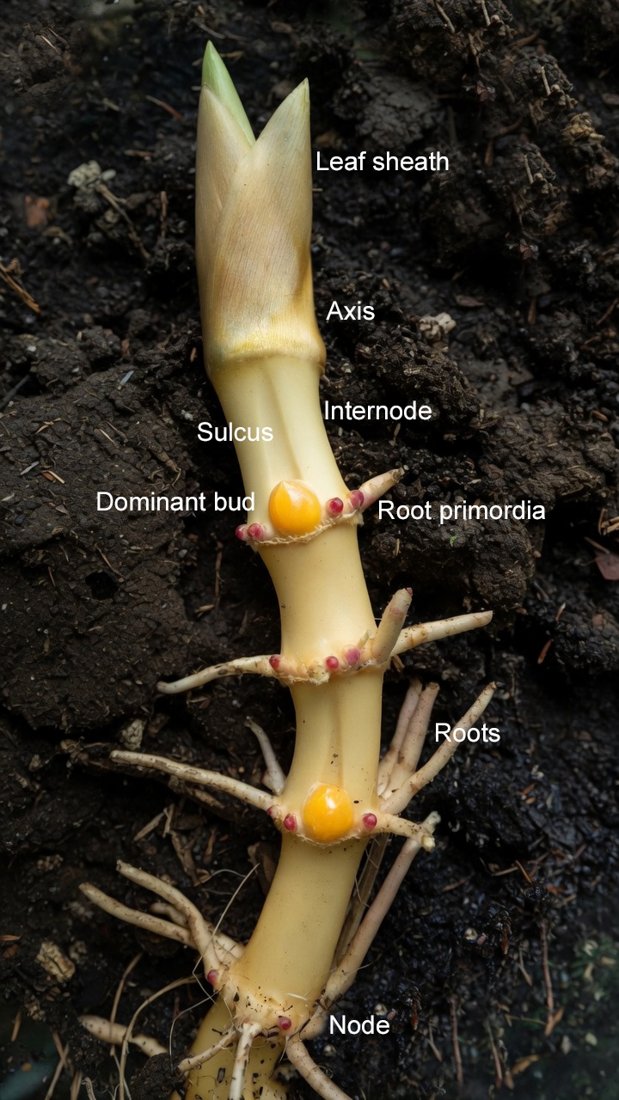
When we notice rhizomes in a grove surfacing — what we call dolphining — we are reading a signal. The deeper soil has gone airless, and the bamboo has surfaced to breathe. The shallow-running rhizome becomes diagnostic: evidence of what is wrong below. Evidence, diagnosis, prescription — the same structure every one of these field reports follows.
A mature grove is crowded underground — a dense mat of rhizomes, roots, and buds, all of it living tissue, all of it respiring, all of it burning oxygen and exhaling CO₂ into the same soil. Crowding and hypoxia are not competing explanations; crowding is one of the ways a soil goes hypoxic. More rhizome packed into a volume of earth means more oxygen demand and more waste gas in the same pore space, faster than the soil can exchange it with the air above. So when the grove dolphins — arcs a rhizome up out of the soil and back down, like the animal breaking the surface — the crowding we diagnose and the oxygen-hunger in the research are the same story. The mat competes with itself for air, and the rhizomes that lose the competition surface to breathe.
The soil breathes better after rain, or after watering from above. Water moving down through the soil acts like a piston, driven by gravity. As the wetting front descends, it pushes the old, stale, CO₂-rich air ahead of it and out; then, as the water drains away and the soil dries, it pulls fresh atmospheric air down behind it into the emptied pore spaces. The rain does not carry air down so much as pump it — wet, drain, and the ground breathes in.
So when you see a rhizome riding shallow, arcing to the surface, do not read only aggression. Read a breath. The grove is telling you what the soil below will not — that down there, in the dark, it has run out of air.
All Rapports de Terrain →